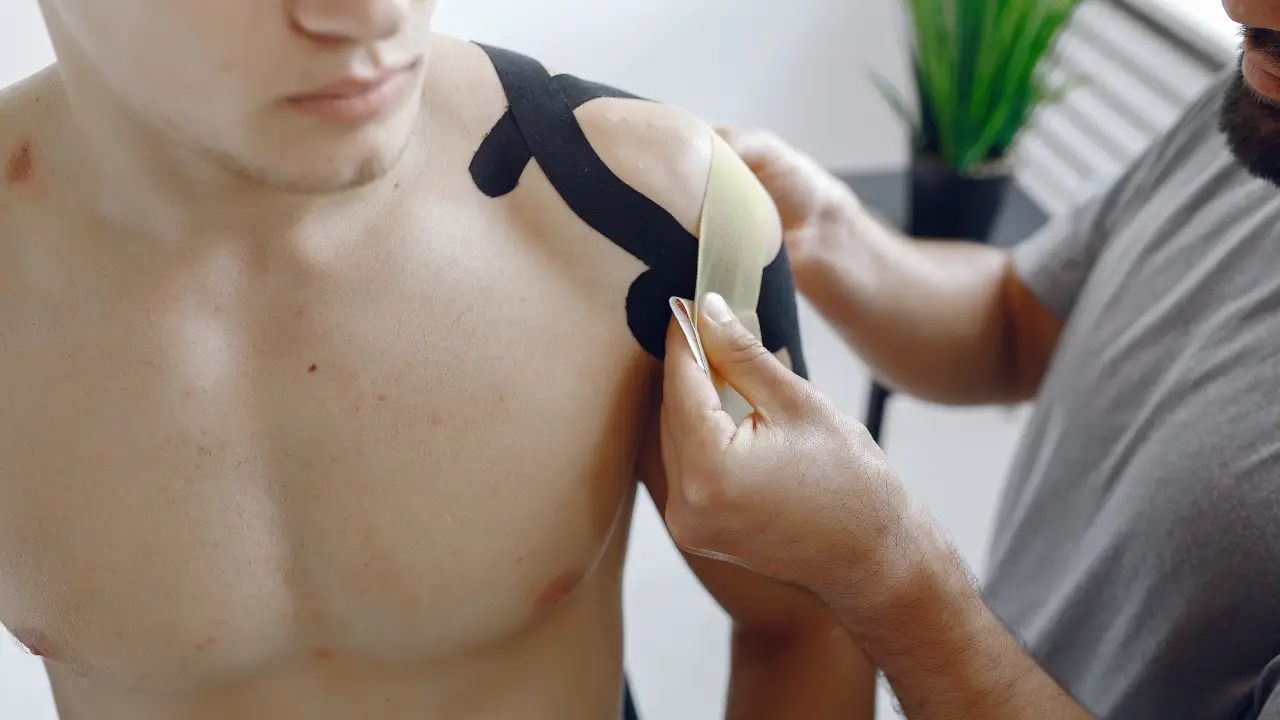
Daily activities in Whitby often include walking to stores, preparing meals, commuting, caring for family, and participating in sports and recreation. When specific muscles or joints begin to feel strained, these familiar motions can feel slower or less coordinated. Physiotherapists frequently include Kinesio Taping in treatment plans to support movement habits while allowing a full range of motion. It uses an elastic, skin-friendly tape placed along specific lines of muscle direction or joint alignment. Rather than holding the body rigid, Kinesio Taping moves with the skin while offering a light cue for steady motion.
At our clinic, the purpose of Kinesio Taping is to reinforce awareness. When people move throughout the day, small shifts in Posture can affect comfort and coordination. The tape acts as a reminder that encourages smoother transitions, whether someone is rising from a chair, carrying groceries, or stepping into physical activity.
Many Whitby residents look for methods that fit naturally into their daily lives. Kinesio Taping works well in this context because it does not require constant adjustment and can be worn during most normal tasks such as driving, working at a desk, or taking a walk. Because the tape stretches and adapts to motion, the body remains free to move, while subtle cues from the tape help the person stay aware of how certain areas are working.
There are several reasons people seek Kinesio Taping:
While every situation is different, the goal in each case is to encourage motion that feels structured and steady as part of someone’s daily routine.
The tape adheres to the skin, gently lifting the skin’s surface. This can promote natural circulation responses, which some individuals find helpful for overall tissue comfort. The elasticity of Kinesio Taping allows it to follow the body’s line of movement, rather than forcing a fixed position. Placement may run along a muscle belly, cross over a joint, or follow a functional movement pattern such as arm raising or leg stepping.
Physiotherapists may use Kinesio Taping to:
Placement depends on the person’s movement habits and the activities they perform most often.
Below are seven ways Kinesio Taping may help support everyday motion for individuals in Whitby:
People who work at desks, drive for long periods, or carry children often notice tension in the shoulder region. Kinesio Taping may provide a gentle reminder to maintain the spacing and pacing of shoulder blade movement as the arms move.
Climbing stairs, rising from the floor, or stepping quickly can feel uneven if knee mechanics shift. Proper placement of Kinesio Taping can help guide awareness of knee position during walking or stair climbing.
Smooth gait depends on coordinated hip movement. A tape placed around the hip region can support awareness during stepping patterns, which may influence comfort during longer walks.
Typing, gripping, and household chores may strain the wrist. Kinesio Taping across the wrist can serve as a cue for pacing and alignment.
A tape around the ankle can help someone stay aware of foot placement during running, skating, hiking, or similar routines, without restricting movement.
Lifting laundry, moving groceries, cleaning, and meal preparation all require frequent changes in motion. The presence of Kinesio Taping can help maintain pacing as movements shift quickly between tasks.
When someone resumes activity after a period of reduced motion, certain areas may need time to adjust. Kinesio Taping helps provide structure during this transition.
Our clinic uses Kinesio Taping as part of movement planning rather than as a standalone technique. During sessions, the physiotherapist observes how the person moves during real activities, not only in still positions. Someone places the tape according to the motions they perform most often—lifting, walking, reaching, bending, or participating in athletics.
We provide step-by-step instructions so the individual sees how the tape connects to their daily patterns.
Therapists integrate the tape into progressions, adjusting its placement or gradually reducing it as movement becomes easier and more coordinated. This keeps the approach responsive to the person’s movement rather than static.
If you are considering this approach, our clinic welcomes you to schedule a session to discuss your daily activities and movement goals. A physiotherapist will assess how you move during routine tasks and apply the tape in a way that fits your daily motion style. This creates a practical way to bring steady, mindful motion into everyday life.
You can arrange a visit to Physiotherapy & Sports Injuries Solutions in Whitby.