
Movement plays an important role in everyday life. From walking around Whitby to staying active at work, exercising, caring for family, or enjoying weekend activities, the body needs coordinated movement to carry out daily tasks. When an injury, stiffness, weakness, or recurring discomfort interferes with movement, simple activities can become difficult.
This is where Physiotherapy Solutions in Whitby can play a role. Physiotherapy focuses on movement, physical function, strength, flexibility, coordination, and mobility. Treatment may be appropriate for people dealing with sports injuries, workplace strains, joint problems, muscle issues, or difficulties following an injury.
At Physiotherapy & Sports Injuries Solutions in Whitby, physiotherapy is centred around assessing movement and identifying factors that may be contributing to a person’s physical difficulties. Treatment plans may include exercise, mobility work, manual techniques, activity modification, and advice about returning to normal activities.
Here are seven reasons people may choose physiotherapy when movement problems affect their everyday lives.
Movement problems can have many causes. A person may have reduced flexibility after an injury, weakness following a period of inactivity, or difficulty moving a joint through its normal range.
Physiotherapy Solutions in Whitby can focus on the physical factors affecting movement rather than simply looking at one isolated symptom. An assessment can consider strength, mobility, posture, balance, coordination, and how the body moves during particular activities.
For example, someone with knee discomfort may also have reduced leg strength or difficulty with movement control. A person recovering from an ankle injury may have stiffness that affects their walking pattern.
By examining movement, physiotherapy can help identify areas that may need attention and establish exercises or techniques that correspond with the person’s current abilities.
No two injuries are exactly alike. Two people may have similar symptoms but different activity levels, medical histories, occupations, or recovery requirements.
Physiotherapy Solutions in Whitby can be adjusted according to the person’s circumstances. Someone who spends most of the day at a desk may need a different exercise program from a recreational runner or someone whose work involves lifting and physical activity.
An assessment can help determine what movements are currently comfortable, which activities are difficult, and what physical goals matter to the individual.
For a Whitby resident, these goals could include returning to walking, getting back to recreational sport, managing workplace demands, or rebuilding confidence with everyday movement.
The treatment process can then focus on achievable stages rather than expecting someone to return immediately to their previous activity level.
Exercise is often an important part of physiotherapy. Depending on the condition, a program may include strengthening exercises, stretches, balance activities, mobility drills, or movements that improve coordination.
Physiotherapy Solutions in Whitby may use progressive exercises to help people develop physical capacity over time. The level of exercise can be adjusted as a person becomes more capable of completing particular movements.
For example, someone recovering from a lower-limb injury may initially perform simple movements with limited resistance. As strength develops, exercises may gradually become more demanding.
This gradual approach can also help people understand how their bodies respond to activity. Rather than avoiding movement altogether, they can learn how to reintroduce appropriate physical activity within their current capabilities.
A physiotherapist can also explain how exercises should be performed and how frequently they should be completed.
Injuries can affect how a person moves long after the initial incident. A sprain, strain, fracture, or sports injury may result in stiffness, reduced strength, altered movement patterns, or hesitation when returning to activity.
Physiotherapy Solutions in Whitby can form part of a structured recovery process after an injury. Treatment may focus on restoring mobility, improving strength, developing balance, and gradually returning to activities that were previously difficult.
For athletes and active people in Whitby, returning to sport can involve several stages. Everyday walking may come first, followed by controlled exercises, sport-specific movements, and eventually a return to training.
The exact progression depends on the injury and the individual. A physiotherapist can assess movement throughout the process and make changes where appropriate.
Movement problems are not limited to athletes. Everyday activities such as climbing stairs, getting out of a chair, reaching overhead, carrying shopping, or walking can become challenging when physical function is affected.
Physiotherapy Solutions in Whitby can focus on helping people work towards activities that matter in their daily lives.
For someone recovering from a shoulder problem, this could involve gradually working towards reaching and lifting tasks. For someone with a lower-limb issue, the focus may include walking, stairs, balance, or getting back to household activities.
Connecting exercises with practical tasks can make a rehabilitation program easier to relate to. Instead of focusing only on individual exercises, the person can understand how physical training relates to the movements they want to perform.
Whitby and the surrounding area provide plenty of opportunities for people to stay active. Running, cycling, gym training, recreational sports, and other physical activities can all place demands on muscles, joints, and connective tissues.
Sports injuries can happen through sudden incidents or repeated physical loading. Common problems can include muscle strains, ligament injuries, tendon issues, and joint-related difficulties.
Physiotherapy Solutions in Whitby can support people working towards a return to sport by addressing factors such as strength, mobility, balance, movement control, and activity tolerance.
A return-to-sport program may also involve sport-specific exercises. For instance, a runner may need to gradually rebuild their tolerance for running, while someone involved in field sports may need to work on changes of direction, acceleration, and controlled landings.
The aim is to progress physical demands in stages that correspond with the person’s condition and activity.
Rehabilitation is often an active process. Exercises completed between appointments can form an important part of maintaining progress and developing physical capacity.
Physiotherapy Solutions in Whitby can give people practical exercises and strategies that they can incorporate into their routines, depending on their condition and treatment plan.
This active approach can help people become more aware of their movement habits and physical capabilities. It can also provide a structured way to work towards functional goals.
For someone who has become cautious about movement following an injury, gradual exercise can provide opportunities to rebuild confidence while monitoring how the body responds.
The program may change over time as movement improves, symptoms change, or activity requirements increase.
Recovery after an injury is not always a straight line. Some people may regain normal movement quickly, while others may continue to have stiffness, weakness, reduced mobility, or difficulty returning to previous activities.
Physiotherapy Solutions in Whitby can support recovery by addressing the physical limitations that remain after an injury.
An initial assessment may look at the affected area alongside wider movement patterns. From there, treatment may include exercises, mobility work, manual techniques, education about activity levels, and a gradual progression towards normal activities.
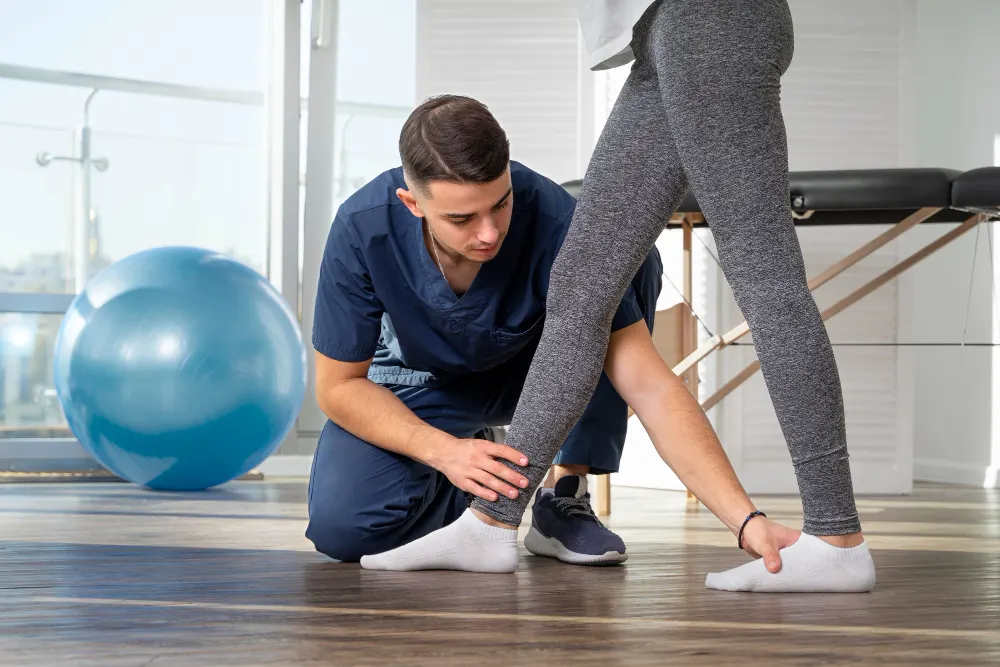
For example, after an ankle injury, a person may initially have difficulty walking comfortably. Rehabilitation could progress from basic mobility and strengthening exercises to balance work and functional movements. Someone returning to sport may then progress to activities that reflect the demands of their chosen sport.
It is important to remember that recovery varies between individuals. The appropriate program depends on the injury, general health, physical condition, daily activities, and recommendations from qualified healthcare professionals.
People may consider physiotherapy when movement difficulties interfere with daily activities, exercise, work, or sport. This can include ongoing stiffness, reduced mobility, weakness following an injury, difficulty returning to activity, or recurring problems associated with movement.
A physiotherapy assessment can help determine whether physiotherapy is appropriate and whether further medical assessments are needed.
If an injury involves significant swelling, deformity, severe symptoms, loss of function, or another urgent concern, medical assessment should be sought promptly.
Physiotherapy may be used for a range of musculoskeletal and movement-related problems, including sports injuries, muscle strains, joint difficulties, reduced mobility, and rehabilitation following certain injuries or procedures. Suitability depends on the individual’s condition and clinical assessment.
Appointment length can vary depending on the clinic, assessment requirements, treatment plan, and type of session. During an initial appointment, time may be spent discussing symptoms, medical history, movement limitations, and physical goals.
Referral requirements depend on the healthcare setting and provider. Many private physiotherapy clinics allow people to arrange appointments directly, but it is sensible to check the clinic’s current booking process before attending.
Yes. Physiotherapy is commonly used as part of rehabilitation for sports-related injuries. Treatment may focus on restoring mobility and strength and gradually preparing the person for the physical demands of their chosen activity.
It can be useful to bring relevant medical information, details of previous injuries, a list of current medication if applicable, and information about activities that are currently difficult. Wearing comfortable clothing that allows the affected area to be assessed may also be helpful.
Movement difficulties can affect work, exercise, household tasks, and everyday routines. Getting an assessment can help clarify what may be contributing to the problem and what rehabilitation steps may be appropriate.
If you are in Whitby and are dealing with an injury, reduced mobility, weakness, stiffness, or a sports-related movement problem, contact Physiotherapy & Sports Injuries Solutions to discuss your situation and arrange an appointment.
Whether your goal is to return to everyday activities, resume exercise, or work towards returning to sport, a physiotherapy assessment can provide a starting point for the next stage of your rehabilitation.
Phone: +1 905-571-5278
Address: 3455 Garrard Rd, Whitby, ON L1R 2N2, Canada